

Spring has arrived, which means one thing for homeowners and DIYers: it's time to tackle everything the winter left behind. Gaps around windows, moisture creeping into deck frames, cracks around vents — the cold months are hard on exterior surfaces, and the damage adds up fast.
The good news? Most of these problems share one solution: butyl seal tape. It's flexible, waterproof, and bonds to just about every surface you'll encounter outdoors. But if you've never used it — or you've used the wrong kind in the wrong place — this guide will change how you approach outdoor weatherproofing for good.
Butyl seal tape is a flexible, rubber-based adhesive tape specifically designed to create a permanent, airtight, and waterproof seal. Unlike standard tapes, it stays pliable in both freezing temperatures and summer heat, which makes it uniquely suited for outdoor applications where surfaces expand and contract with the seasons.
In this guide, you'll learn exactly what butyl seal tape is, where to use it outdoors, how to apply it correctly for a long-lasting seal, and what mistakes to avoid. Whether you're sealing a deck frame, fixing a leaky RV roof, or weatherproofing windows before summer storms roll in, this is your complete reference.
What Is Butyl Seal Tape — and Why Is It Different?
Butyl seal tape is a pressure-sensitive adhesive tape made from butyl rubber, a synthetic elastomer prized for its exceptional resistance to water, air, and UV exposure. Unlike foam weatherstripping or silicone caulk, butyl tape is pre-formed, flexible, and ready to apply without curing time.
Here's what sets butyl tape apart from other sealing materials:
- Stays flexible at extreme temperatures. Butyl rubber maintains its elasticity from roughly -40°F to 250°F, so it won't crack in winter or lose its grip in summer heat.
- Conforms to irregular surfaces. It molds around fastener heads, rough lumber, flashing edges, and uneven gaps where rigid sealants fail.
- Bonds to almost anything. Butyl tape adheres to wood, metal, vinyl, EPDM rubber, concrete, fiberglass, and most roofing membranes.
- No mixing, no mess, no curing wait. Apply it, press it down, and it seals immediately — no tools required.
- Stays waterproof permanently. It doesn't shrink, crack, or dry out the way caulk can over three to five years.
According to the Rubber Manufacturers Association, synthetic rubber like butyl maintains structural integrity longer than most elastomeric sealants in exterior environments precisely because of this resistance to oxidation and temperature cycling.
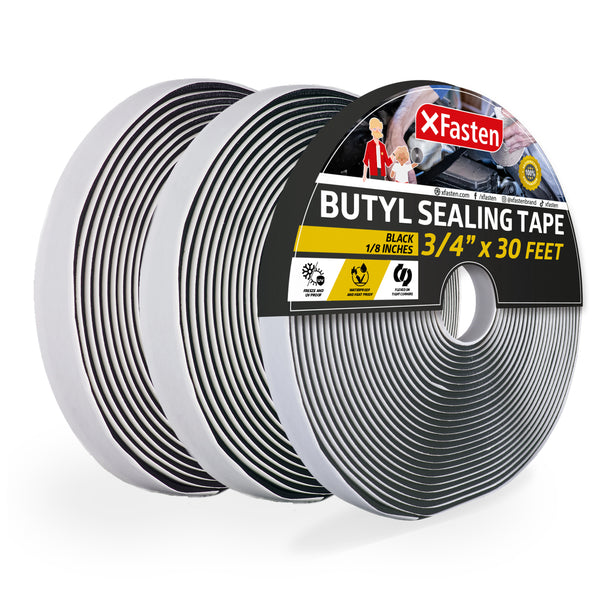
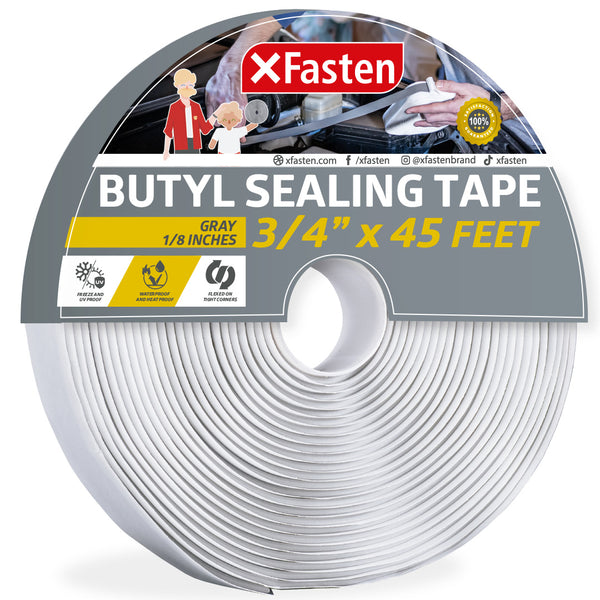
The XFasten Butyl Seal Tape 3/4"×45ft (Black) is XFasten's #1 revenue product for good reason — it hits the sweet spot between residential and professional use, delivering a permanent seal on every outdoor surface where water and air infiltration are a concern.
The 7 Best Outdoor Uses for Butyl Seal Tape
Butyl seal tape excels anywhere surfaces meet outdoors and need a permanent moisture barrier. Here are the seven applications where it outperforms every alternative.
1. Deck and Joist Framing
Water infiltration between joists and beams is the #1 cause of premature deck rot. When you install or repair deck framing, applying butyl seal tape to the top edge of each joist before laying decking boards creates a barrier that keeps moisture from sitting on the wood's end grain — where it causes the most damage.
Apply a continuous strip of XFasten Butyl Seal Tape along the top of each joist before fastening deck boards. The tape conforms to any crown or warp in the lumber, ensuring full contact across the surface. This is especially critical for pressure-treated lumber, where the cut ends are the most vulnerable entry points for moisture.
2. Window and Door Flashing
Spring storms bring driving rain that finds every weakness in your building envelope. Butyl seal tape is the professional standard for sealing window flanges and door sill pans because it bridges the gap between the window frame and the rough opening without ever drying out or cracking.
Apply it to the sill before setting the window, then wrap the jambs before installing house wrap or exterior cladding. The result is a moisture barrier that outlasts every other sealant option at this application point.
3. Roof Repairs and Penetrations
Whether you're patching a small crack in metal roofing or sealing around a pipe penetration, butyl tape provides an instant, weather-tight repair. The tape stretches to conform to curved surfaces and bonds directly to galvanized metal, aluminum, TPO, and EPDM without primers on most applications.
For temporary emergency repairs, butyl tape holds until a permanent fix is scheduled. For long-term use over metal roofing, it outlasts most caulk-based alternatives by years.
4. RV and Camper Sealing
RV roofs and sidewall seams are subject to constant vibration, expansion, and UV exposure — conditions that destroy rigid sealants within a season or two. Butyl tape's flexibility makes it the go-to material for sealing RV vents, skylights, and awning attachments. It vibrates without cracking and stays adhered even when the vehicle flexes over rough terrain.
5. HVAC Ductwork and Penetrations
Where ductwork passes through walls or floors to the exterior, air leakage is a year-round energy problem. The U.S. Department of Energy estimates that duct leakage accounts for 20–30% of heating and cooling energy loss in a typical home. Butyl tape creates an airtight seal around these penetrations that flexible foil HVAC tape can't match for longevity.
6. Gutters and Downspout Joints
Leaking gutter joints are one of the most common — and most damaging — exterior maintenance problems. Butyl tape applied to the inside of gutter seams before reassembly (or as a repair over an existing joint) creates a permanent seal that water can't work through, even during heavy rain.
7. Concrete Cracks and Foundation Gaps
Best butyl seal tape for outdoor concrete use: Apply to clean, dry cracks in concrete foundations, retaining walls, and flatwork to prevent water infiltration. While butyl tape is not a structural repair, it provides excellent surface-level moisture management for hairline and medium cracks up to about 1/4 inch wide.
How to Apply Butyl Seal Tape for a Lasting Bond
A butyl seal tape installation takes under 30 minutes for most exterior repairs and lasts for years — but only if you follow the correct prep and application sequence. Here's how to do it right every time.
Step 1: Clean and Dry the Surface
This is the most important step. Butyl tape bonds to clean, dry surfaces. Any moisture, dust, oil, or old caulk residue will prevent full adhesion and allow water to work under the tape over time.
- Remove any loose paint, old sealant, or debris with a wire brush or scraper.
- Clean the surface with isopropyl alcohol (70% or higher) and let it dry completely.
- In temperatures below 40°F, warm the surface and the tape before applying — cold butyl tape is stiff and won't conform well until it warms up.
Step 2: Measure and Cut Before You Peel
Measure your run and cut the tape to length before removing the backing. Butyl tape is sticky the moment the backing comes off, and trying to cut a sticky strip mid-application leads to wrinkles, folding, and a weak seal.
Use sharp scissors or a utility knife for clean cuts. For corners, cut the tape at a 45-degree angle on both pieces so they overlap cleanly at the miter.
Step 3: Peel and Position with Care
Peel back a few inches of backing, position the tape at your starting point, then slowly peel the remainder as you lay the tape down. Keep the tape taut but don't stretch it — stretched butyl tape will eventually pull back to its original length, compromising the seal.
For deck joist applications, center the tape on the top edge of the joist so it overlaps both sides slightly, giving you full coverage of the bearing surface.
Step 4: Apply Firm, Even Pressure
Press the tape firmly into place along its entire length with your thumb or a J-roller. Butyl tape is pressure-sensitive: the harder you press, the stronger the bond. Work from the center outward to eliminate air pockets.
For inside corners, press the tape firmly into the corner with a rounded tool or your fingernail. Any gap at a corner will become a path for water.
Step 5: Overlap Seams by at Least 1 Inch
Where two pieces of butyl tape meet, overlap them by at least 1 inch. Butt joints will leak. For long runs, work in manageable sections and always overlap — never gap.
Step 6: Apply a Cover Layer if Exposed to UV
Butyl tape's one vulnerability is prolonged direct UV exposure. While the XFasten Butyl Seal Tape has UV resistance built in, tapes exposed to direct sunlight on south-facing surfaces will last longer when covered with a strip of metal flashing tape, house wrap tape, or trim. In most applications — underneath decking boards, behind flashing, inside window rough openings — butyl tape is fully protected and will last indefinitely.
5 Pro Tips That Make Every Seal Last Longer
Weatherproofing professionals who work with butyl tape daily follow these five rules that most DIY guides leave out.
1. Don't skip the primer on porous surfaces. On raw concrete, OSB, and rough-sawn lumber, a quick coat of contact cement primer or a butyl-compatible surface primer dramatically improves adhesion and prevents the tape from peeling at edges over time.
2. Apply in the shade when temperatures exceed 80°F. Hot asphalt, metal roofing, and south-facing wood can reach 130°F+ in direct summer sun. At those temperatures, butyl tape will adhere aggressively on contact, giving you no chance to reposition. Work in the early morning or on shaded surfaces when possible.
3. Tape over fasteners, not around them. On deck joist tape, run the tape continuously over the top of every fastener head. Don't cut around them or try to fit the tape between screws — water finds every gap, and a fastener head is one of the most common entry points for moisture into a deck frame.
4. Use the 3/4" width for tight joints, wider widths for broader coverage. The XFasten Butyl Seal Tape 3/4"×45ft is the right tool for most seam-sealing applications. For broader coverage — full joist-top coverage or wide flashing laps — consider stacking two strips with a 1/2" overlap, or use a wider butyl flashing tape for that specific application.
5. Don't use butyl tape as a structural adhesive. Butyl tape creates a seal, not a structural bond. Use it to prevent moisture and air infiltration, not to hold components together under load. Always use appropriate mechanical fasteners for structural connections and let the butyl tape do what it does best: keep water out.
Start Sealing Smarter This Spring
Spring is the best time to weatherproof your home's exterior. Temperatures are mild, surfaces are dry after winter, and you have months before summer storms and autumn rains put your seals to the test.
The three most important takeaways from this guide: prep your surface thoroughly before applying, press the tape firmly for full contact, and always overlap your seams by at least 1 inch. Get those three things right, and your butyl seal tape application will outlast everything around it.
The XFasten Butyl Seal Tape 3/4"×45ft (Black) is the right tool for virtually every outdoor sealing job on this list — from deck joist protection to window flashing to RV roof repair. It's flexible, permanent, and built to handle every season your home throws at it.
Want to see where butyl tape fits into your larger spring outdoor project? Check out our roundup of the best tapes for outdoor projects — we cover waterproof, UV-resistant, and weather-ready options across the full XFasten line.

Comments
No comments yet. Be the first!