

You know your house in daylight. You know exactly where the top step sits, how far the driveway runs before it meets the street, and which porch rail wobbles a little. But the sun sets earlier every week this time of year, and the house you know by heart turns into a house full of guesses.
That gap between "I know this yard" and "I can actually see this yard" is where most fall injuries happen. It's not the stairs themselves that trip people up — it's not being able to see where the stairs end.
The fix isn't a full outdoor lighting overhaul. It's five specific spots, a roll of the right tape, and about five minutes each. In this guide, you'll learn which five spots disappear first as the days get shorter, why each one is a fall risk, and exactly which tape fixes each one.
Why Fall Risk Spikes When the Clock Falls Back
Shorter days don't just mean less daylight — they mean your evening routine (mail, trash cans, letting the dog out, walking guests to the car) now happens in the dark, on the same paths you walk without thinking twice about in July. The layout hasn't changed. Your ability to see it has.
Older adults are especially exposed to this shift: the CDC notes that falls are the leading cause of injury among adults age 65 and older, and a large share of outdoor falls happen on steps, walkways, and other transition points people navigate every day. Add in trick-or-treaters, delivery drivers, and holiday guests who don't know your property at all, and a poorly lit edge becomes a liability for everyone who steps onto it, not just the people who live there.
The good news: most of these falls trace back to the same handful of "invisible" spots. Fix those, and you've fixed most of the risk.
The 5 Spots That Disappear First
Best fix for each spot at a glance: these five locations account for the majority of dusk-and- after fall hazards around a typical home, and each one has a specific, five-minute tape solution.
1. The Front Steps
The edge of a step is the single easiest thing to misjudge in low light. Once the sun drops, the line between "still on the step" and "off the step" disappears completely — especially on concrete or painted wood, which don't reflect much light to begin with.
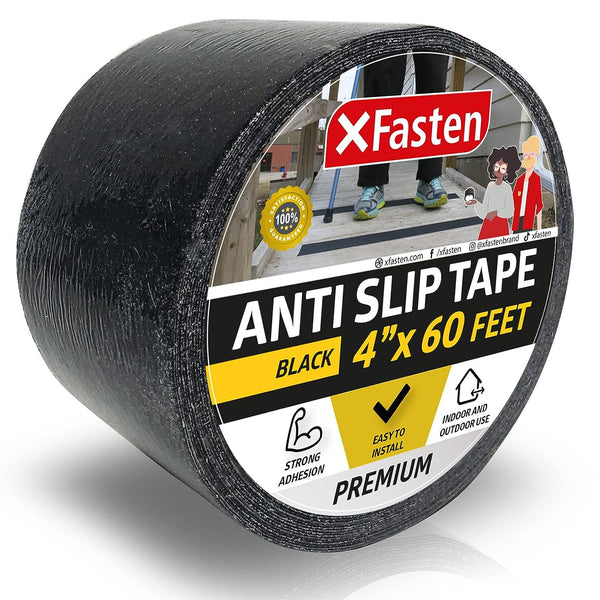
Fix it: Run XFasten Anti Slip Tape Black with Glow in the Dark Strips (4 inch x 30 ft, 6mm strip) along the front edge of every step. The gritty surface gives your foot something to grip in wet or icy conditions, and the glow strip charges in daylight, then marks the exact edge of each step once the light fades — no wiring, no waiting for an electrician.
2. The End of the Driveway
Where the driveway meets the street, or where it narrows near a mailbox post, is a spot drivers and pedestrians both misjudge after dark. It's the difference between a car pulling in cleanly and a car clipping a mailbox post — or worse, a person walking to grab the mail without realizing a car is backing out.
Fix it: Apply XFasten Reflective Tape, White (2 inch x 5 yd) along the edge of the driveway apron and mailbox post, or use Reflective Tape, Red & White (2 inch x 5 yd) for a higher-contrast strip that reads clearly under headlights. Reflective tape doesn't glow on its own — it bounces light straight back at the source, which is exactly what you want when the "light source" is a pair of headlights.
3. The Porch Rail Everyone Forgets
Handrails are supposed to catch you when a step surprises you. But if the rail itself is hard to see — a dark wood rail against a dark porch, or a rail that ends a foot before the steps do — people reach for it and miss.
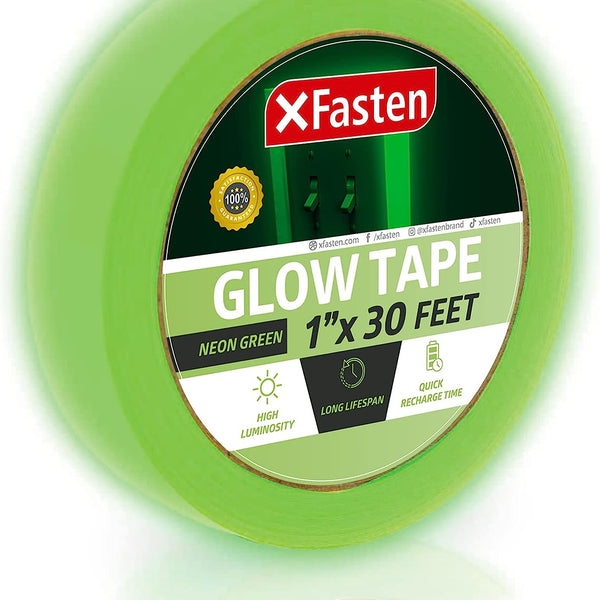
Fix it: Wrap XFasten Glow in the Dark Tape (1 inch x 30 ft) around the start and end of the handrail, and along the top edge where a hand naturally lands. It's a thin, low-profile strip, so it marks the rail without changing how it feels in your hand.
4. Yard Hazards Hiding in Plain Sight
Garden hoses, low tree roots, sprinkler heads, tent stakes, and uneven pavers all blend into the grass the moment the sun goes down. These are the trip hazards nobody thinks to flag, because they're invisible during the day, too — you just know where they are.
Fix it: Tie a length of XFasten Fluorescent Flagging Tape around or near each hazard. Because it comes in multiple colors, you can color-code the yard: orange for a hose reel, pink for a low branch, blue for a sprinkler head. Choose the pack size and color mix that fits your yard:
- Fluorescent Flagging Tape Orange — 12 pack (150 ft each roll): high-visibility, single color, enough rolls to mark a season's worth of hazards
- Fluorescent Flagging Tape Pink — 12 pack or 6 pack (150 ft each roll): a softer, equally bright option for households that want to color-code by hazard type
- Fluorescent Flagging Tape, 150' x 1" Wide, 12-pack (Orange, Green, Blue, Red, Pink, Yellow): a full rainbow set for color-coding an entire property — hoses, sprinkler heads, low branches, and tent stakes each get their own color
- Fluorescent Flagging Tape, 150' x 1" Wide, 6-pack (Orange): a smaller commitment if you only need to flag a few recurring hazards
A one-second glance at the color tells anyone walking the yard after dark exactly what's ahead of them, before they find out the hard way.
5. The Temporary Hazard You Haven't Gotten To Yet
Every home has a stretch where something is mid-repair: a freshly patched section of walkway, an open utility trench, a ladder left out overnight, wet paint on a step. These are the most dangerous spots of all, because nobody — including you — has adjusted their mental map yet.
Fix it: Cordon it off with XFasten Caution Tape (3 inch x 1000 ft). String it between stakes, a railing, and a porch post to create a visible boundary that reads as "stop" even from across the yard. One 1,000-foot roll covers an entire property's worth of temporary hazards across a full season of repairs.
Pro Tip: Layer Glow and Reflective for Double Coverage
Glow-in-the-dark tape and reflective tape solve two different problems, and the best setups use both. Glow tape works on its own, using stored light, which makes it ideal for spots with no direct light source pointed at them, like a side porch rail. Reflective tape needs an active light source — headlights, a flashlight, a porch light — to bounce back, which makes it the better choice for anything facing the street. Apply glow tape to the steps and rail, then apply reflective tape to the driveway edge, and the whole entry sequence stays visible no matter where the light is coming from.
See Your Home the Way the Dark Does
The five spots in this guide — front steps, the end of the driveway, the porch rail, yard hazards, and temporary trouble spots — account for most of the falls that happen around an otherwise well-kept home. None of them require rewiring or a weekend project. They require a five-minute pass with the right tape.
Start with the spot you already avoid walking near after dark — that's usually the one that needs it most. Grab the anti-slip and glow tape for your steps and rail, the reflective tape for your driveway, flagging tape for the yard, and a roll of caution tape for whatever repair is currently in progress. By the time the clocks change, your home will be as easy to read at 7 p.m. as it is at noon.


Comments
No comments yet. Be the first!